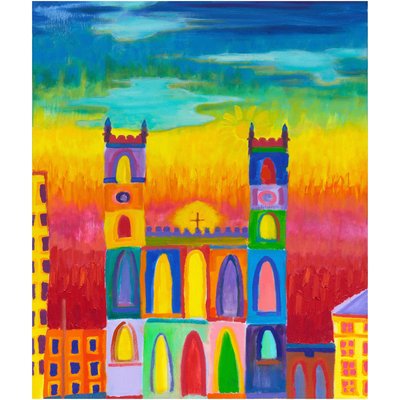
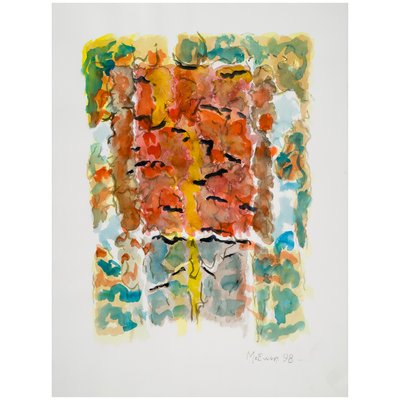
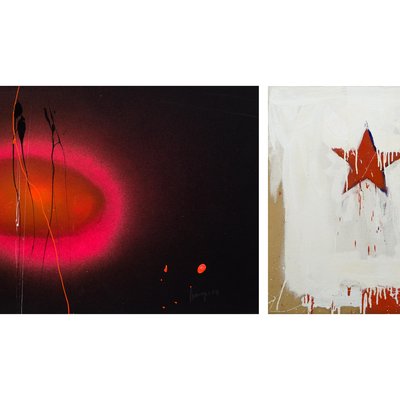
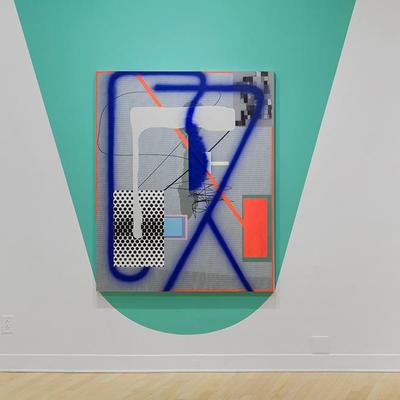
The exhibition “En attente d’une bonne nouvelle” invites us to reflect on how we inhabit the world while suspended in an unstable present, saturated with discourse, images, and predictions of disaster. Amid political acceleration, collective exhaustion, and the fragmentation of our points of reference, the very idea of a shared future sometimes seems to waver. Yet, despite this pervasive sense of disintegration, actions persist. Forms emerge. Voices continue to seek, observe, and transform.
Bringing together the practices of andes a. beaulé, Véronique Chagnon-Côté, Syrine Daigneault, and Jacinthe Loranger, the project revolves around a shared focus on the present moment—its tensions, its contradictions, but also its possibilities for emancipation and reinvention. Although their approaches take distinct paths, the artists share a desire to slow down the gaze in order to examine the structures that shape our experiences: dominant discourses, social mechanisms, spatial constructions, as well as the images, narratives, and forms inherited from the past that continue to circulate, transform, and settle in the present.
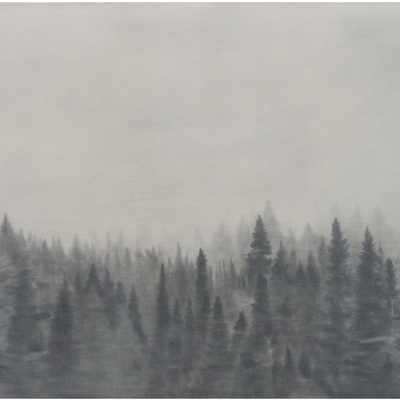
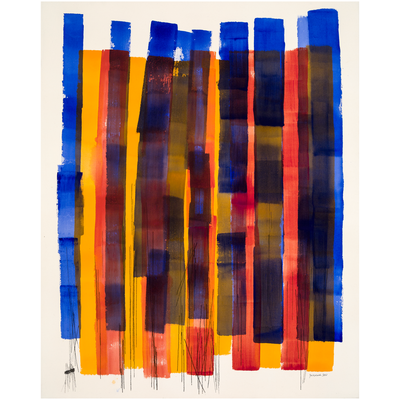
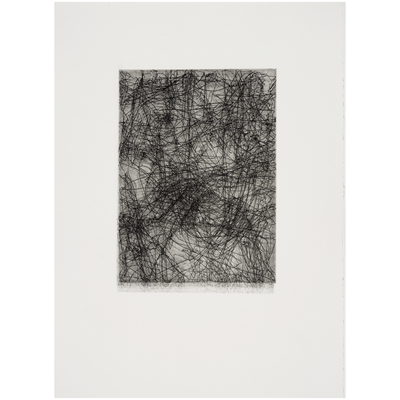
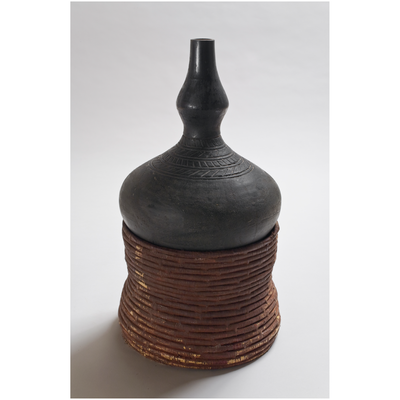
In the works presented, the artistic gesture functions simultaneously as a trace, a reflection, and a way of existing in the world. Drawing, painting, printmaking, and sculpture become tools for navigating instability rather than denying it. The works of andes a. beaulé explore the transformative potential of the gesture, the ephemeral, and queer abstraction; those of Syrine Daigneault examine the relationships between personal history, social norms, and cultural representations. In Jacinthe Loranger’s work, the printed image, the object, and repetition open up a space where satire, absurdity, and political anxiety converge, while Véronique Chagnon Côté examines how images shape our perception of time and space in the age of simultaneity.
Without seeking to offer a unified interpretation of the present, *En attente d’une bonne nouvelle* brings together practices that nonetheless choose to remain attentive, sensitive, and open to the world. Faced with the overload of discourse and the instability of our times, these works resist not so much through assertion as through persistence: they take the time to observe, to doubt, and to create images in a different way. Between humor, melancholy, desire, and lucidity, they perhaps sketch out the fragile possibility of a shared space—a place where something can still happen.
Frédérique Ulman-Gagné would like to warmly thank Galerie Simon Blais for offering her the opportunity to curate this first exhibition.